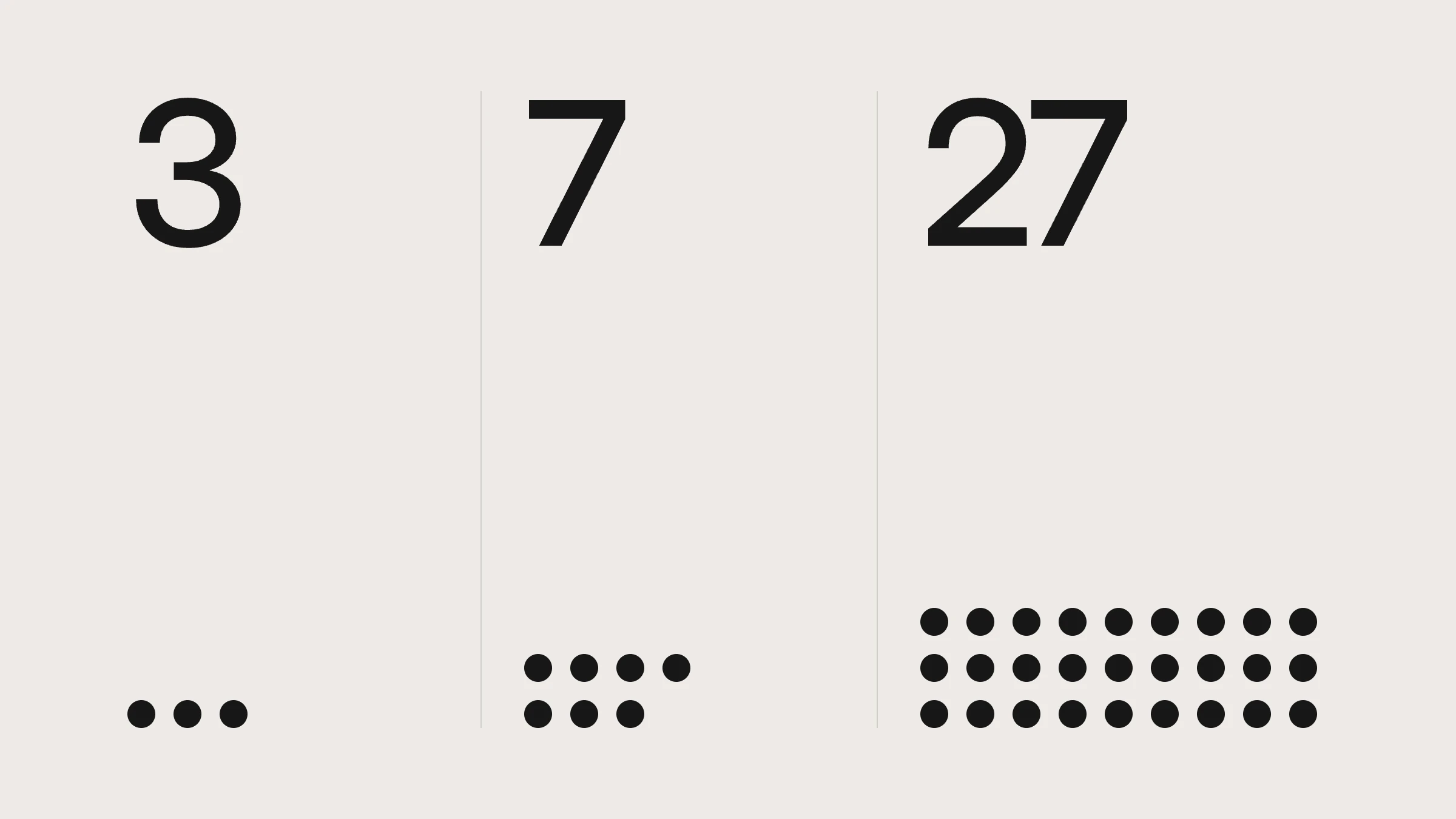
The 3-7-27 rule is a branding rule of thumb about attention and repetition. In its most common version, you have about 3 seconds to make a first impression, people need around 7 encounters to notice and remember a brand, and around 27 before they’re ready to act.
Where does it come from?
Nobody seems to know. We couldn’t find an original study or author, and different sources explain the numbers differently. Some use 27 to mean 27 exposures; others use it to mean 27 minutes. Treat it as a memorable way to describe a real pattern, not as research.
It’s related to the older “rule of 7” in marketing, the idea that people need to hear a message several times before they act. That idea is also a rule of thumb, not a precise number.
What it gets right
First impressions are fast. People decide in moments whether a brand looks trustworthy and relevant. A clear logo, a clear headline and a consistent look do most of that work.
Recognition takes repetition. Very few people buy the first time they see a brand. They need to see it again and again before it feels familiar.
Familiarity builds trust. The more often people meet the same brand in the same form, the more established it feels.
What it gets wrong
The exact numbers don’t hold up. A premium service may need many more touchpoints; an impulse purchase may need just one. The rule also ignores the quality of each encounter. Seeing a confusing ad 27 times won’t make anyone buy.
What to do with it
Make the first 3 seconds count. Make it clear within seconds what you sell and who it’s for, on your website, packaging and profiles.
Be consistent. Repetition only works if people recognize you each time. Use the same logo, colors, typography and tone everywhere, so every encounter adds up.
Show up in many places. Search, social media, packaging, email and word of mouth all count as encounters. Brand guidelines keep them consistent when different people create them. Florevita’s identity system, for example, keeps the wordmark, monogram, tagline and colors consistent across every touchpoint. See the full Florevita case study.