A brand vision describes where your brand is going: the future you want to reach. A mission describes how you’ll get there: what you do, for whom and how, starting now. Both grow from one deeper idea, your purpose, and both should be written before anyone designs a logo.
Where vision and mission fit
In the first meeting of every branding project, we start with the brand core. We picture it as four circles. Purpose sits at the center. Vision, mission and values surround it, and each one depends on the one inside it.
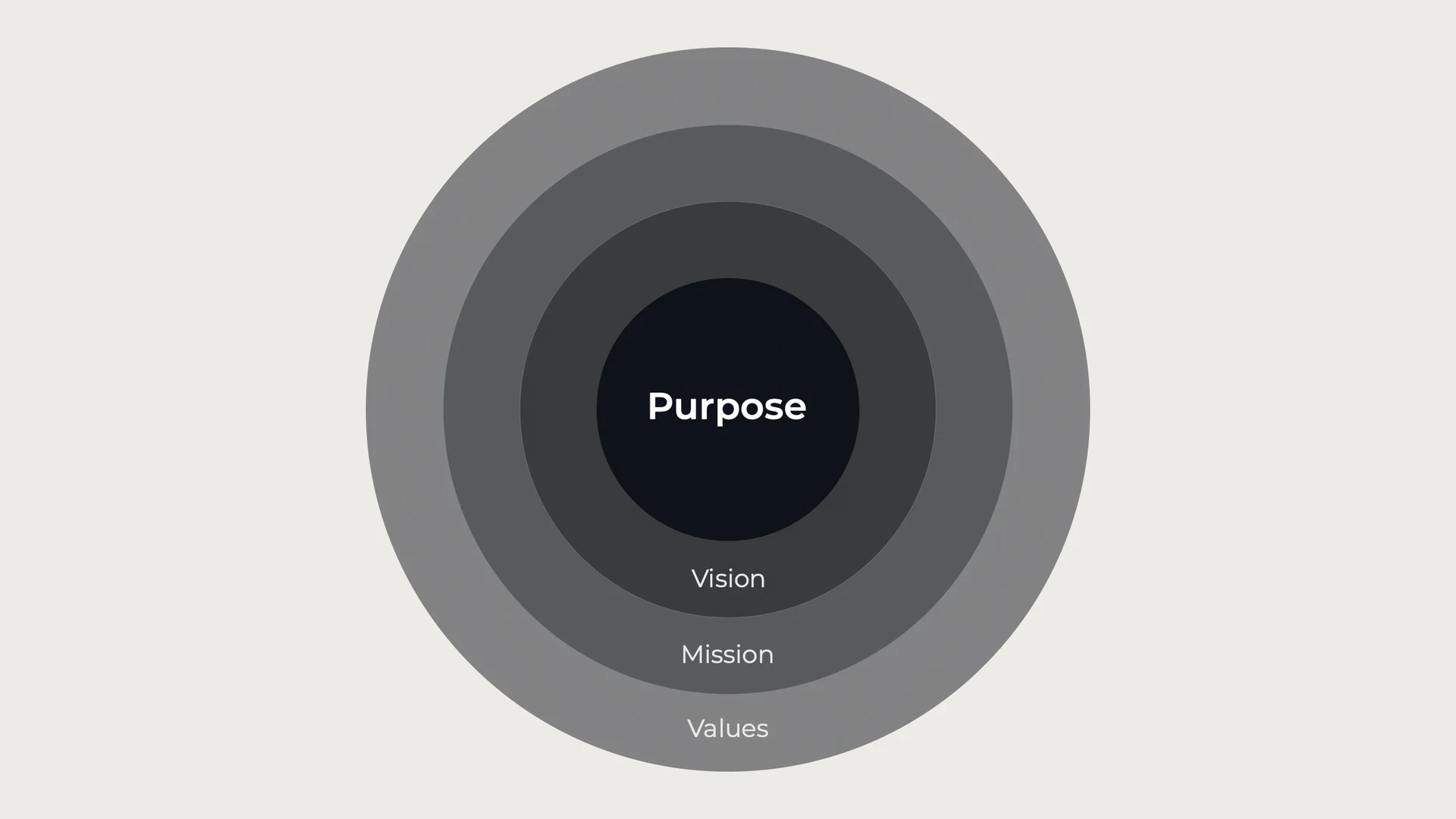
Purpose is the meaningful reason the brand exists. Vision is the destination. Mission is the route. Values are the principles you won’t break along the way. If the center is unclear, every outer circle becomes a guess.
What is a brand vision?
A vision answers one question: where is this brand going to be in the future? It describes a destination, not a task. A good vision is ambitious enough to guide decisions for years, but concrete enough that someone could later say whether you got there.
Three questions help you write it. Where will the brand be in the future? What does that future brand look like? What is the destination you need to reach?
IKEA puts its vision in one line: “To create a better everyday life for the many people.” Visa’s is just as short: “To be the best way to pay and be paid, for everyone, everywhere.” Neither describes a product. Both describe a world the company wants to create.
What is a brand mission?
A mission answers a different question: what route will you take to get there? It describes what you do now, who you do it for and how. If the vision is the destination, the mission is what you commit to this month, this year and over the next ten years to reach it.
Google’s mission is “to organize the world’s information and make it universally accessible and useful.” Nike’s is “to bring inspiration and innovation to every athlete in the world.” You can read either one and know what the company does every day.
Vision vs. mission at a glance
Vision: the future. It describes where you’re going and why it matters, and it rarely changes.
Mission: the present. It describes what you do, for whom and how, and it can evolve as the business grows.
Together: the vision gives the mission a direction, and the mission makes the vision believable.
A real example from our work
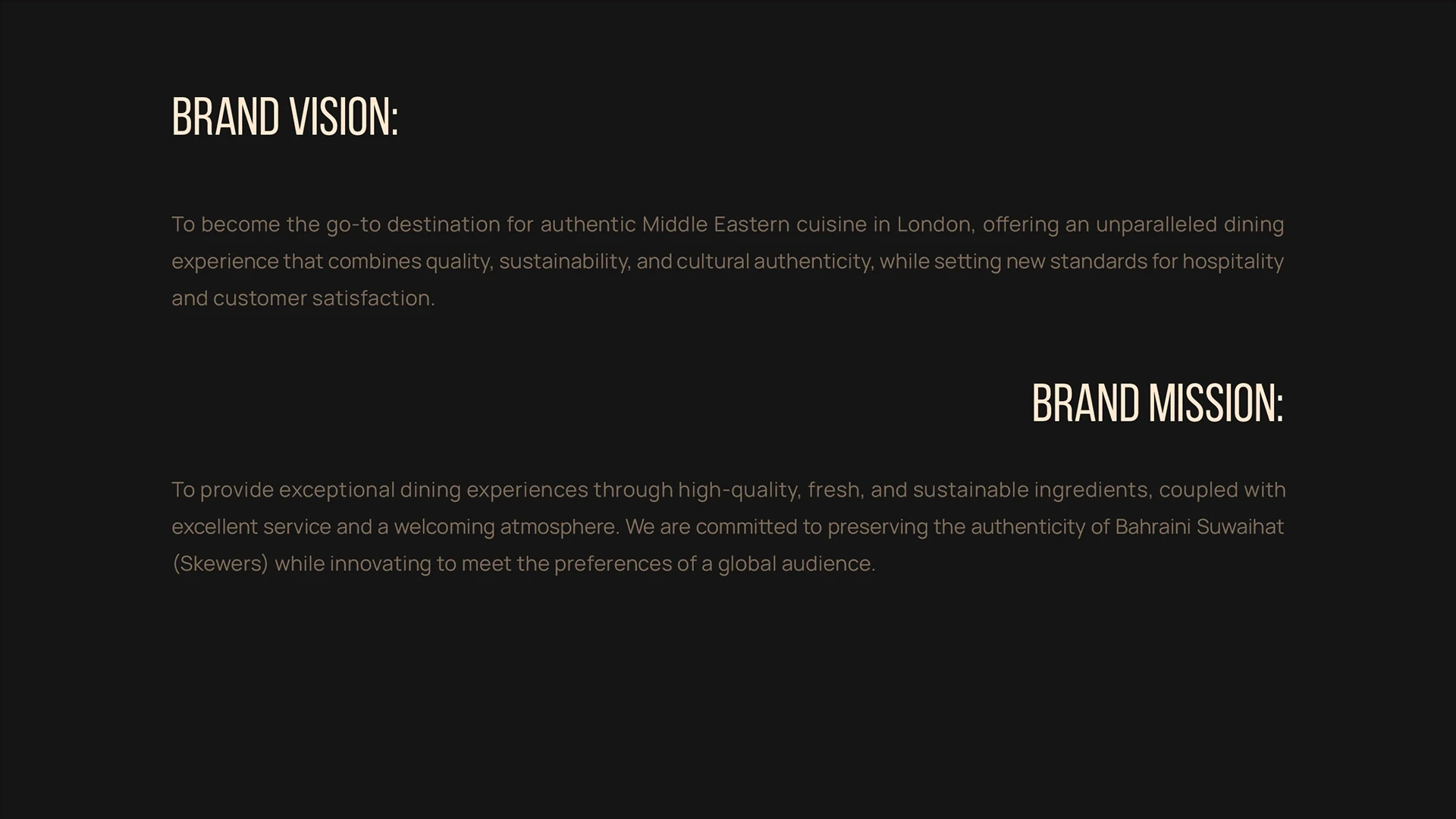
The Black Lumi brings Bahraini suwaihat, or skewers, to a contemporary restaurant in London. Its vision is to become the go-to destination for authentic Middle Eastern cuisine in London. Its mission is to provide exceptional dining experiences through fresh, high-quality ingredients, excellent service and a welcoming atmosphere, while preserving the authenticity of Bahraini skewers for a global audience.
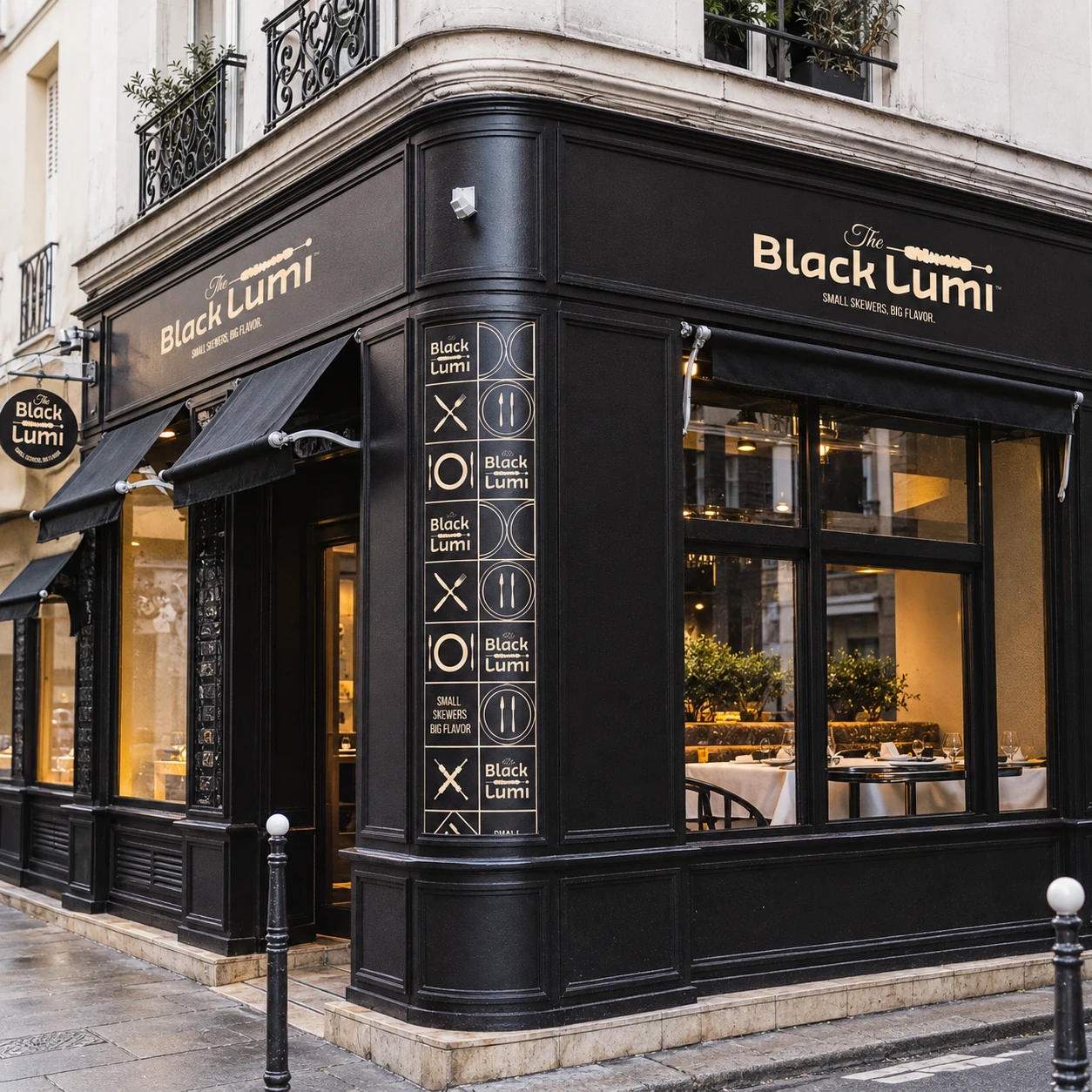
Those two statements shaped everything that followed: a warm, welcoming personality, a logo inspired by the restaurant’s serving trays and skewers, and an identity built to feel at home in Soho while staying true to Bahrain. See the full Black Lumi case study.
How to write your own in five steps
1. Start with purpose. Write one sentence about why the business exists beyond making money. Ask yourself: who do we help, why do we help them, how do they feel, and what difference have we made?
2. Write the vision as a destination. Describe the future in one sentence. Leave out tasks and short-term targets, like next quarter’s revenue.
3. Write the mission as a route. Say what you do, who you serve and how, in one or two sentences.
4. Test them together. Read the mission and ask: if we do this every day, will we reach the vision? If the answer is no, one of them needs to change.
5. Keep it short enough to remember. If your team can’t repeat it from memory, it’s too long.
Common mistakes
Writing slogans instead of direction. Using words that could belong to any company, like “excellence” and “innovation.” Mixing the two, so the vision lists tasks and the mission describes a dream. And writing both once, then never using them to make a decision.
Why this matters before the logo
A logo, colors and typography only work when they express something specific. When the vision and mission are clear, design decisions stop being a matter of taste: you can ask whether a color, a word or a shape moves the brand toward its destination. Without them, you’re choosing what looks good today.
Vision and mission are the first part of a brand strategy. Here are the five pillars of brand strategy, with real examples.
Building a new brand or rethinking an existing one? Tell us about your project, and we’ll start where every strong brand starts: with its purpose.