Most founders who contact a branding studio share the same doubts: is it too early, can I do this myself, what if I don’t like the result, and is it worth the money? They’re good questions. Here are honest answers, including when you shouldn’t hire a studio yet.
“Is it too early to work on my brand?”
If you’re still testing whether people want your product, it may be. Talk to customers first and make sure the idea works. But once you’re ready to launch, raise money, sell to customers or put your name on packaging, it’s the right time. Changing a brand after people know it is harder and more expensive than building it properly before they do.
“Can I do it myself first?”
You can, and for an early test it may be enough. The risk is that a homemade identity becomes permanent. Founders often keep a placeholder logo for years because changing it feels expensive, and customers learn to recognize something that was never designed to grow.
If you start on your own, at least write down your purpose, your audience and what makes you different. That thinking will be useful whoever designs the brand.
“Do I need a strategy, or just a logo?”
A logo without a strategy is a guess. The strategy decides who you’re for, why they should choose you and how you should sound. The logo is the visible result of those decisions. Read why brand strategy should come before logo design.
“What actually happens in a branding project?”
Every project we take on starts with a brand foundation workshop: a working session to understand the business before anything is designed. It moves through four stages.
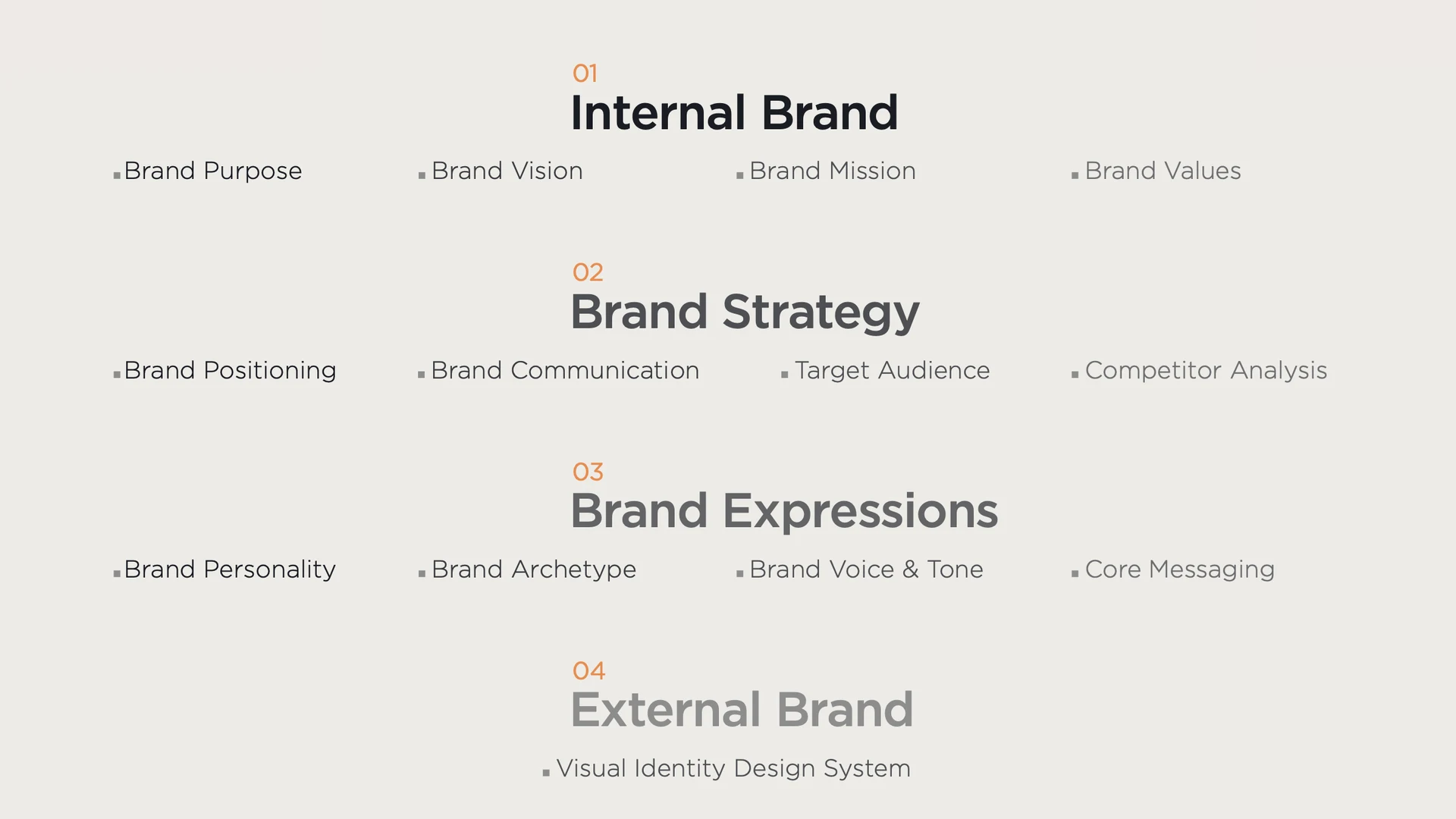
The internal brand defines your purpose, vision, mission and values. The brand strategy covers positioning, communication, your target audience and your competitors. Brand expressions turn those decisions into a personality, an archetype, a voice and core messages. Only then do we design the external brand: the visual identity system people actually see.
Learn how to write your brand vision and mission.
“What will you need from me?”
Your time and your honesty. You know your business, your customers and your ambitions better than anyone. We bring the questions, the research and the design. The more openly you answer, the more the brand will sound like you.
Before the first meeting, it helps to think about why the business exists, who you serve best and where you want it to be in five years.
“What if I don’t like the design?”
It’s the most common worry, and it’s exactly why strategy comes first. When you’ve agreed on the purpose, audience and personality before design starts, the design is judged against those decisions, not only against personal taste. You see the reasoning behind every choice, so feedback becomes a conversation about the strategy instead of a guessing game.
“How much does branding cost?”
It depends on the scope. Our full brand identity packages start at $3,999 for Standard, which includes strategy, a primary logo, wordmark and icon, typography, a core color palette and essential guidelines. Here’s what branding costs and what affects the price.
“How long will it take?”
Timing depends on the scope and on how quickly decisions are made on both sides. Here’s how long a branding project usually takes.
“Should I hire an agency, a freelancer or a studio?”
The right partner depends on your stage and budget. Look for someone who asks about your business before showing you designs, who can explain the reasoning behind their work, and whose portfolio includes brands that match your ambition, not just your industry. Compare agencies, freelancers and studios.
“How do I know a studio is right for me?”
Ask them what a brand is. If the answer is only a logo and some colors, keep looking. Ask to see the strategy behind past projects, not just the final visuals. And notice how they listen: a good partner asks more questions in the first meeting than they answer.
Advice before you start
Write one paragraph about why your business exists. Name the one customer you most want to win. List three competitors and what they all have in common. Decide what you can invest and when you need to launch. You’ll make better decisions with any partner, and you’ll quickly know whether they understand you.
Ready to talk about your brand? Tell us about your project, and we’ll help you find the right starting point.